
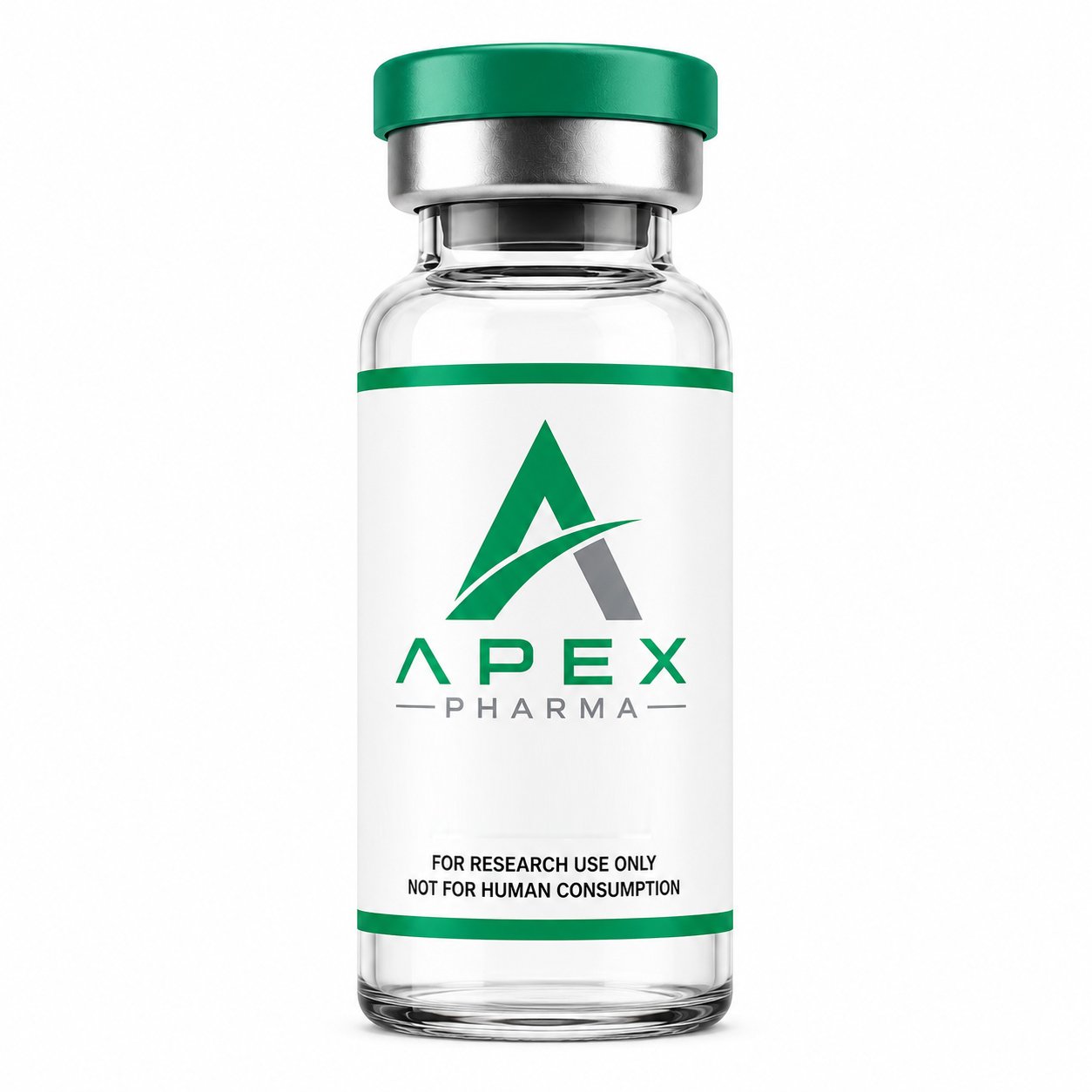


Semax 10mg Research Peptide: Product Overview, Structure, Research Applications & Laboratory Use
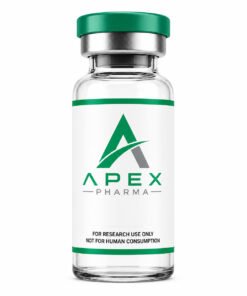
Semax 10mg is a research-grade peptide supplied in a sealed vial containing a stated total quantity of 10mg of Semax. This synthetic heptapeptide is derived from the ACTH(4–7) fragment and is investigated in laboratory and preclinical research involving neurochemical signalling, gene expression, neurotrophic pathways, cellular stress responses and neurological mechanisms.
For researchers searching for a Semax 10mg research peptide, Semax peptide UK, or Semax laboratory research material, understanding the molecular structure, analytical characteristics, documentation and intended research applications is essential.
Semax is composed of seven amino-acid residues and is commonly identified by the sequence Met-Glu-His-Phe-Pro-Gly-Pro. Its ACTH-derived structure has made it an established subject of experimental investigation, particularly in research relating to neurological signalling, cerebral ischaemia models, cellular responses and molecular pathways.
Semax 10mg is supplied exclusively for controlled laboratory, analytical and scientific research. It is not intended for human consumption, self-administration, therapeutic use or personal experimentation.
Semax 10mg Research Peptide at a Glance
Semax 10mg provides researchers with a clearly identified quantity of synthetic Semax in a convenient vial presentation. Depending on the research programme, the material may be evaluated using analytical techniques, peptide-characterisation methods, cellular models and other controlled experimental systems.
Key Semax 10mg product features
- 10mg stated quantity of Semax research material
- Synthetic seven-amino-acid peptide
- ACTH(4–7)-derived molecular structure
- Sequence: Met-Glu-His-Phe-Pro-Gly-Pro
- Sealed research vial presentation
- Suitable for controlled analytical investigation
- Useful for peptide identification and characterisation research
- Relevant to neurological and cellular-signalling research
- Batch documentation where applicable
- Research-use-only designation
- Not intended for human or veterinary administration
Researchers should always review the product label, batch documentation and applicable laboratory procedures before using any research material.
What Is Semax Peptide?
Semax is a synthetic heptapeptide derived from a short sequence of adrenocorticotropic hormone (ACTH). Unlike full-length ACTH, Semax is studied primarily as a molecular research compound in neurological, cellular and neurochemical research models.
The molecule contains the first four residues associated with the ACTH(4–7) fragment, followed by a Pro-Gly-Pro sequence. This creates the seven-residue peptide commonly represented as:
Met-Glu-His-Phe-Pro-Gly-Pro
Semax has attracted scientific interest because researchers have investigated its relationship with neurotrophic signalling, gene expression, cerebral ischaemia models, cellular stress responses, inflammatory pathways and neurological processes.
Much of the published research has originated from Russia and neighbouring countries, and the evidence base varies considerably according to the experimental model and research methodology.
Importantly, Semax should not be confused with an approved pharmaceutical product in jurisdictions where it has not received marketing authorisation. A research peptide supplied in a laboratory vial is not equivalent to a licensed medicine.
Semax Peptide Structure and Molecular Composition
Understanding the structure of a research peptide is important when assessing identity, analytical behaviour and experimental suitability.
Semax contains seven amino-acid residues:
- Methionine
- Glutamic acid
- Histidine
- Phenylalanine
- Proline
- Glycine
- Proline
The complete sequence is:
Met-Glu-His-Phe-Pro-Gly-Pro
The ACTH-derived portion and terminal Pro-Gly-Pro sequence have been investigated in relation to peptide stability, degradation, molecular signalling and biological activity in experimental systems.
Researchers studying Semax peptide structure may investigate factors including chromatographic behaviour, molecular mass, degradation pathways, stability and interactions within defined laboratory models.
The exact biological consequences of these molecular characteristics depend on the experimental conditions and should not be extrapolated automatically from laboratory or animal findings to humans.
Why Is Semax Studied in Research?
Semax has been investigated across several areas of neurological and molecular research. The breadth of published experimental work makes it relevant to researchers studying peptide signalling and mechanisms associated with the nervous system.
Research areas associated with Semax include:
- Neurotrophic signalling
- Brain-derived neurotrophic factor pathways
- Cerebral ischaemia models
- Neuronal stress responses
- Gene-expression research
- Inflammatory signalling
- Oxidative stress models
- Vascular and angiogenic pathways
- Learning and memory models
- Neurochemical signalling
- Peptide stability and degradation
- Melanocortin-related pathways
- Cellular adaptation and survival mechanisms
These represent research areas rather than approved medical indications. Experimental findings may differ according to species, cell type, concentration, exposure conditions, analytical methodology and study design.
Semax and Neurotrophic Signalling Research
One of the most closely studied areas surrounding Semax involves neurotrophic signalling.
Neurotrophic factors are signalling molecules associated with neuronal development, maintenance, adaptation and plasticity. Experimental research has investigated whether Semax exposure is associated with changes involving brain-derived neurotrophic factor (BDNF) and related molecular pathways.
Researchers may investigate:
- BDNF expression
- TrkB-associated signalling
- Neuronal gene regulation
- Neuroplasticity-related markers
- Cellular adaptation
- Stress-response pathways
- Changes in signalling molecules over time
These investigations can help researchers understand potential molecular interactions associated with Semax.
However, changes observed in cultured cells or animal models should not be interpreted as proof of a therapeutic effect in humans. Translational research requires appropriately designed clinical evidence.
Semax and Cerebral Ischaemia Research
Cerebral ischaemia research is another area in which Semax has been investigated.
Cerebral ischaemia involves reduced blood flow and oxygen availability within brain tissue. Experimental models allow researchers to examine changes in neuronal, vascular, immune and inflammatory pathways under controlled conditions.
Studies involving Semax have investigated molecular responses associated with:
- Cellular stress
- Inflammatory signalling
- Vascular regulation
- Gene expression
- Neuronal responses
- Immune-related pathways
- Cellular adaptation
These models may provide useful information for understanding peptide-associated molecular mechanisms.
They do not, however, establish that Semax 10mg is suitable for treating stroke, cerebral ischaemia or any other medical condition.
Semax Peptide and Gene-Expression Research
Gene-expression analysis is an important area of Semax research.
Laboratory investigators may examine how exposure to Semax affects transcriptional activity under specific experimental conditions. Research methods can include quantitative PCR, transcriptomic analysis, protein-expression assays and other molecular biology techniques.
Potential research targets include genes and pathways associated with:
- Immune responses
- Chemokine signalling
- Vascular development
- Cellular stress
- Neurotrophic signalling
- Synaptic regulation
- Inflammatory responses
- Cellular survival and adaptation
A change in gene expression does not necessarily result in a predictable physiological effect. Researchers should therefore evaluate gene-expression findings according to the magnitude, timing, biological system and experimental context.
Semax 10mg Laboratory Research Applications
A Semax 10mg research peptide may be relevant to laboratories conducting several types of analytical and experimental work.
Peptide Identification and Characterisation
Researchers can investigate molecular identity and peptide integrity using analytical methods such as:
- High-performance liquid chromatography (HPLC)
- Mass spectrometry
- Chromatographic profiling
- Molecular-mass assessment
- Comparative peptide analysis
These techniques can help establish whether analytical signals correspond with the expected Semax molecule.
Neurotrophic Pathway Research
Controlled experimental systems may be used to examine potential relationships between Semax and neurotrophic signalling pathways, including markers associated with BDNF and related receptors.
Cellular Stress Research
Semax may be evaluated in controlled cellular models involving metabolic, inflammatory or oxidative stress. Researchers can assess changes in molecular markers, gene expression and signalling proteins.
Cerebral Ischaemia Models
Preclinical research models can be used to investigate neuronal, vascular and inflammatory responses associated with reduced cerebral blood flow and oxygen availability.
Peptide Stability Studies
Laboratories may examine Semax stability and degradation under defined storage and experimental conditions.
Variables may include:
- Temperature
- Light exposure
- Moisture
- Storage duration
- Environmental conditions
- Sample preparation
Results should be interpreted only within the conditions under which the testing was performed.
Comparative Peptide Research
Researchers may compare Semax with related ACTH-derived fragments or other short peptides to investigate how differences in molecular structure influence analytical behaviour, stability and signalling.
Why Choose a 10mg Semax Research Vial?
The Semax 10mg vial presentation provides a clearly stated quantity of research material that may be suitable for laboratory programmes requiring peptide characterisation, comparative analysis or controlled experimental work.
Potential applications include:
- Peptide identity assessment
- HPLC method development
- Mass spectrometry analysis
- Stability studies
- Degradation research
- Cellular-signalling investigations
- Gene-expression studies
- Comparative peptide analysis
- Academic research projects
Before purchasing Semax 10mg, laboratories should estimate their material requirements and confirm that appropriate storage, inventory, handling and disposal procedures are available.
Semax 10mg Product Specifications
| Specification | Details |
|---|---|
| Product name | Semax 10mg |
| Research compound | Semax |
| Peptide sequence | Met-Glu-His-Phe-Pro-Gly-Pro |
| Peptide classification | Synthetic ACTH-derived heptapeptide |
| Peptide length | 7 amino-acid residues |
| Stated quantity | 10mg |
| Presentation | Research vial |
| Research areas | Neurological, molecular and cellular-signalling research |
| Intended purpose | Controlled laboratory and analytical research |
| Human use | Not intended |
| Self-administration | Not permitted |
Semax 10mg vs Other Research Peptides
Semax belongs to a different research category from retatrutide.
Semax is an ACTH-derived heptapeptide primarily investigated in neurological, neurochemical and cellular-signalling research.
Retatrutide, by comparison, is an investigational peptide associated with research into GLP-1, GIP and glucagon receptor signalling.
These compounds have different molecular structures, research objectives and experimental applications and should not be considered interchangeable.
Researchers interested in the wider Apex Pharma research catalogue can also review:
Each product should be assessed independently according to the requirements of the relevant research programme.
Semax Research Peptide: Identity, Purity and Quantity
When purchasing a laboratory peptide, researchers should understand the difference between identity, purity and quantity.
Identity
Identity testing evaluates whether the analytical characteristics of the sample are consistent with the expected Semax molecule.
Purity
Purity testing estimates the proportion of the detected material associated with the principal peptide component under the specified analytical method.
Quantity
Quantity testing evaluates the amount of target research material present in the tested sample.
These measurements should not be treated as interchangeable.
For example, a reported chromatographic purity value does not by itself establish sterility, endotoxin status, total vial content, long-term stability or suitability for administration.
Batch Testing and Certificate of Analysis
For laboratories purchasing Semax research peptide, batch-specific documentation can be an important part of scientific procurement.
Where available, a Certificate of Analysis (CoA) or independent analytical report may provide information relevant to a specific production batch.
Researchers should check:
- Product name
- Compound identity
- Batch or lot number
- Date of analysis
- Analytical methodology
- Reported purity
- Molecular-mass results
- Sample appearance
- Testing laboratory information
- Quantity measurements where applicable
Documentation should correspond to the exact Semax 10mg batch being purchased.
A report relating to a previous batch, different vial presentation or different peptide should not automatically be assumed to represent the current material.
Semax 10mg Storage and Laboratory Handling
Semax 10mg should be stored according to the product label and accompanying technical documentation. Product-specific instructions should take priority over general peptide-storage information.
General laboratory considerations include:
- Follow the stated storage conditions
- Keep the vial appropriately sealed
- Minimise unnecessary exposure to environmental conditions
- Protect research material from unsuitable light or moisture exposure
- Avoid unnecessary temperature fluctuations
- Record the batch number upon receipt
- Maintain appropriate inventory records
- Restrict access to authorised personnel
- Follow documented laboratory disposal procedures
Handling, analysis and disposal should be undertaken by suitably trained personnel using appropriate laboratory equipment and established safety procedures.
Who Is Semax 10mg Intended For?
Semax 10mg is intended for qualified researchers, laboratories and organisations conducting legitimate scientific or analytical investigations.
Potential research users may include:
- Analytical laboratories
- University research departments
- Biotechnology companies
- Contract research organisations
- Neuroscience research groups
- Peptide-analysis laboratories
- Cellular-signalling researchers
- Scientific procurement teams
It is not intended for consumers seeking cognitive enhancement, wellness products, medical treatment or personal experimentation.
Why Buy Semax 10mg Research Peptide from Apex Pharma?
For laboratories searching for Semax 10mg UK, Semax research peptide UK, or Semax laboratory research material, product identification and documentation are important considerations.
Apex Pharma provides research compounds in clearly identified presentations intended for controlled scientific investigation.
Key considerations include:
- Clearly stated product quantities
- Vial-based research presentations
- Batch documentation where available
- Analytical information where applicable
- Research-use labelling
- UK-based customer support
- Nationwide delivery
- A growing range of research compounds
Researchers should review the individual product information, current availability, product documentation and applicable research-use requirements before placing an order.
Frequently Asked Questions About Semax 10mg
What is Semax 10mg?
Semax 10mg is a research vial containing a stated total quantity of 10mg of Semax, a synthetic ACTH-derived heptapeptide used in laboratory and preclinical research.
What is the Semax peptide sequence?
The commonly reported Semax sequence is:
Met-Glu-His-Phe-Pro-Gly-Pro
It contains seven amino-acid residues.
Is Semax an ACTH peptide?
Semax is an ACTH-derived synthetic heptapeptide. Its structure incorporates the ACTH(4–7) fragment together with a Pro-Gly-Pro sequence.
What is Semax used for in research?
Semax has been investigated in research involving neurotrophic signalling, gene expression, cerebral ischaemia models, cellular stress, inflammatory pathways, vascular responses and neurological mechanisms.
These are research areas and should not be interpreted as approved medical uses.
Is Semax approved as a medicine in the UK?
Semax is not generally authorised as a medicine in the UK. A Semax research vial should therefore not be represented as an approved pharmaceutical treatment.
Is Semax the same as retatrutide?
No. Semax and retatrutide are structurally different investigational peptides associated with different areas of scientific research.
What is Semax 10mg used for in a laboratory?
Potential laboratory applications include peptide identification, analytical characterisation, HPLC and mass-spectrometry research, stability studies, gene-expression investigations, cellular models and comparative peptide research.
Does Semax 10mg come with batch documentation?
Batch documentation may be available depending on the product and testing programme. Researchers should verify documentation against the specific batch being purchased.
How should Semax 10mg be stored?
Researchers should follow the storage conditions provided on the product label and accompanying technical documentation. Product-specific instructions take precedence over general guidance.
Can Semax 10mg be used by consumers?
No. Semax 10mg is supplied for controlled laboratory, analytical and scientific research only. It is not intended for consumption, self-administration, therapeutic use or personal experimentation.
Important Research-Use Notice
Semax 10mg is supplied exclusively as a research material for controlled laboratory, analytical and scientific investigation. It is not supplied as an authorised medicine, dietary supplement, consumer healthcare product, cosmetic or medical device.
The product must not be consumed, self-administered, used therapeutically or incorporated into personal experimentation.
Researchers and purchasing organisations are responsible for complying with applicable legislation, institutional requirements, laboratory safety procedures, product-specific storage instructions and relevant scientific standards.
Be the first to review “Semax 10mg”
Related products




Reviews
There are no reviews yet.